Tuesday, 17 April 2018

Edtech Summit 2018

Tuesday 17/4/18

Keynote Speaker: Lindsay Wesner

Once upon our Time.

Lindsay uses her own story to inspire and empower writers and teachers. 

Rear Admiral Grace Hopper- saying

Lyndsay sees the need for change in education. The world is evolving and education needs to catch up. "Our classrooms are too diverse and our communities too important for such simplistic notions that one size fits all." Mr Wormeli.

In teaching, there is a lot of one size fits all, prescriptive lessons lacking student's voice. Compartmentalised subjects nothing that truly mirrors the real world. 

Students already use a range of tools to engage with others. So why not look at ways to make learning relevant using tools to communicate stories that affect change.

Innovation is the change that unlocks new value - Jamie Notter 


What would education look like for our learners if we gave them a context and platform to share stories that really matter? 

People think that stories are shaped by people but its the other way around. They are shaped by the world around us.
              People connect with stories. We all see with different eyes. We all have stories to tell. Coding and Computational thinking - its relevance - see a problem and create a solution - let's do it ourselves. A seed of a fresh idea. How to change the world. It's not about the language of coding it's about changing the world. Which problem would you like to solve? Don't accept things the way they are. What do we really want? 

How to make time to do the things you want for your learners. The enemy of change is TIME and sometimes Curriculum. With TIME you learn to invest it in the things you want results. Rethink how we see time. 


The Curriculum can be seen as innovation if we use it the right way, rather than one-size fits all.

                                           
How do we help students to recognize their problems and what tools do we need to provide for them to find the solution. Give them the space to solve these problems. Be amazed at what students come up with.

The pain of process is necessary to see change evolve.

Weapons: we need a vision that we want to achieve.
                we need a community of like-minded visionaries - a small group 
                of committed people to affect change.
                We need our stories to generate change.


Screen Casting
Anthony Speranza
Talks about screencasting - A screencast is a digital recording of computer screen output, also known as video screen capture. It enables the teacher to create short movies with audio narration that can be shared students or selected audience.


Screen Casting frees you up as a teacher and also multiplies you as a teacher. Meaning that SC gives you the access to do multiple things.
You can create ways to present information to students and parents. 
It's another tool to engage with others.

In your classroom, students appreciate it more if they see you and hear you in recordings. Do keep recordings short. Learning can be lost in too much information.

tip: Alt shift R for quick recording.

Google Draw
Jacque Allen
Cognition Education 

Google drawing is a canvas
the select tool is your friend


Annotate graphics
Create a Post-it Wall

Crop an image,
Create a mindmap,
Changing images,
Create an image map,
Create a comic 


(They only work as PDF's if exporting)


Create a Wordbank with images


Don't let your Perfectionism slow you down - Patrick Green


Create an infographic


Creating Collaborative Storyboards


Twitter Atu Twitter Mai

Te Mihinga Komene

Session: Twitter 101 

(icebreakers to connect and introduce)

What does Twitter do?
Getting people connected in a social space.
Pro's
You hear all the news before everyone else. 
You don't need to know everyone on Twitter. 
You can connect with the famous, the not so famous, people of interest,
people with similar passions. You can have your say on a leveled platform.


Te Mihinga uses Twitter as a platform to promote and normalize 
te Reo Māori. 

What we did:

1.  Set up a Twitter account.
2.  we searched for different tweeters.
3.  we shared a message.

It's as simple as that. Well, not really but yes I did it.


Monday, 16 April 2018

Edtech Summit 16 April 2018

Monday 16/4/18

Jim Sill   EDtech Speaker

Community and Connections

How do we use Google tools to showcase the community of the school, location, diversity of students, learning?

Keynote Speaker:      Patrick Green 


Patrick Green is currently an Education Technology Coordinator at Singapore American School. Patrick has been in teaching for nearly 20 years. Patrick is Apple Distinguished Educator, Google Certified Educator and Google Education Trainer and YouTube Star teacher.

Innovative Schools:
Da Vinci Innovation LABS
Sequoyah School - they institutionalise failure as innovation.  
Learning is individualised and shaped. 

The Relevant Teacher Relevant teachers aren't waiting for schools to change - they are making the change. Flipping their classroom and allowing their students to be the teacher. They teach with a whole new attitude.


#EasyBib - write smart

Relevant T are not afraid of accessible information.

RT allow students on exams to use devices because they know in the real world that's what happens.

Book: The End of Average - Todd Rose
One Size Fits Nobody

RT are meeting students where they are at.
RT see all social media as part of a learners world.

99U.com

Portfolios are authentic and RT are making them part of the classroom.

Key- Autonomy - Mastery - Purpose

The Shoulder Shrug - Patrick Green

Using TIME wisely e.g. 

20% time - Genius hour, Passion Time - wonder wall - wonder time
iTime       Alison White    Shaun Kirkwood

Making learning individualised.  TRimagine - investigate - iterate

Student agency - giving learning back over to the students
How can I make some time???? 
RT encourage independent thinking to inspire creativity.

Relevant teachers have a superpower. They can take anything and use it for learning.

RT's are trying to insert more interesting ideas into their work.
How to stay relevant - Be a learner - its growth and change - being more connected.

Be a learner
Be Relevant


Anthony Speranza 
Classroom 101


Classroom makes it easy for learners and instructors to connect-inside and outside of school. Learn how to set up classes and add students, create assignments, and review student work. Work with the whole class to deliver assignments.  Best to set up with a school account rather than a personal account.

(You can set settings so that students can only comment.)

Students as early as year 1 and 2 can start commenting on
learning tasks. Tasks can be developed and managed. e.g. Set topic 
Posting visual literacy-view image provided and leave a comment in the discussion below.
Or you can set a video and get students to complete a task.
Google classroom has a central location to find things.


Supporting, Reading, Writing, and Research with Google

Barbara Landsberg.

App: read&write
Tools we can use to support learning 
Student Agency
Voice and choice

Technology has evolved to prop students up. 
The effort of decoding takes away the ability of comprehension.

Text to speech is free from google-
Struggling students may not have been exposed to reading

recording and speaking
voice typing


Design thinking and iExplore at Ormiston Primary school
Michael Davidson

Design Thinking and iExplore


iExplore time - the time that innovates children to come to school and motivated. The future of learners is unpredictable - learning those 21st-century skills.

Design thinking involves developing Agentic thinkers amongst our learners. Working with learners through the thinking process to identify a problem that needs fixing and have learners explore the problem then work towards a solution collaboratively and with lots of feedback.

Questions need to relevant and not too difficult. 

Google Sites for Visible teaching and Learning

Fiona Grant
Educator and Facilitator 
Manaiakalani Education Trust


Fiona talks about how to create a google site where learning is visible and accessible for learners and whānau. We looked at new Google sites in combination with Google Drive to use, create and organise content that supports teaching and learning in 1:1 learning environments.


Friday, 23 March 2018

What is Autism? - Dr Tony Attwood

Tony Attwood

Professor Tony Attwood believes the "out of the box" thought processes of people on the autism spectrum will solve the world's big problems.
He is credited with being the first clinical psychologist to present Asperger's syndrome not as something to be "fixed " but as a gift, evidenced by many of the great inventors and artists throughout history.
Professor Attwood is highly regarded for his ability to connect with and bring out the talents of people with Asperger's. He describes himself as a translator between the "neurotypical" and Asperger's worlds.
What is Autism? 
It is a different way of thinking, learning and relating.
Described as Italian drivers - don't read the signs, interrupt and get upset when they're not invited to birthday parties or upset other people.
What are Neurotypical - they are everyone else who is not Aspi. 
Females with  ASD - are observers, analysers and imitaters. These are the key cognitive components of ASD - searching for patterns in people to imitate. She puts on a mask and fakes it till she makes it. Exhausting to act neurotypical.
They look for a variety of ways to recover from exhaustion. Recovery only works in solitude - an island of silence and tranquillity. A haven away from behind the real mask. So in a school setting of academic learning and social relationships and expectations, they need solitude because it's far more draining. Behind closed doors, once they get home are the Minecraft and Pokemon designers - they are Aspi.
It can sometimes explain foreign accents because of their nature to watch their favourite programmes in isolation.
Often when ASD start school, they are self-taught.
They will either excel at school or not see the point and be unable to cope and leave.
Amercia exports ASD to NZ - American accent - challenges are social conversational.

IQ tests at 7years old to know what the learning style is - visual and verbal. Visualiser - are the engineers and artists. Male and female aspi 2 to 1. It can come out in women with eating disorder etc. They are clever at hiding their ASD. A career in Medicine is really common. they can't convert thinking into speech. 

A picture paints a thousand words. ASD visualise but can't verbalise. They can't regulate the voices that are spoken in ILE> They are honest because the truth is important than social implications for telling on someone. Auditory memory decays so kids forget quickly what they're supposed to do. "Create a youtube video of what to do or record the voice and video of instructions. 
www.learningappguide.com.au 

Internalising reactions
They are more likely to understand what is written rather than what is taught. The difference in cataloguing friends - noticing the difference. Internalising reactions - depression reactions - catastrophising issues - escape into imagination/fiction and become authors and playwriters. They start out loud and chat with their imaginary friend because they have no friends. 

Externalising reactions - Arrogance - Donald Trump syndrome - if your not good socially/sport - value intelligence so attempt to prove they are smart by correcting and complaining about people - narcissistic personality. Surface sociability - go to the library with their nose in a book - it's a safe and quiet space. The librarian is probably aspi. 

Processing Time - hidden agenda may be apparent - notorious for poor handwriting skills. Delay in working out the intentions of others. Ruminate on why they may be bullied, the problem never has closure because they don't understand why. It takes time to process the motives of people. 

Reading - If you change the font it's a different world. Word retrieval problems. 

Maths - we teach math as quantity but aspi may see it as shapes and patterns. they can't explain their thinking. Like rules. High school is really challenging and can cause great confusion due to the variety of ways teachers teach and show their way of doing things. Comfort in number can calm and restore. Snooker is geometry Poke  - bland faces

Handwriting is obsolete - as is horse riding to Auckland!!! 

Dyspraxia goes by many names: developmental coordination disorder, motor learning difficulty, motor planning difficulty and apraxia of speech. It can affect the development of gross motor skills like walking or jumping. 

It can affect fine motor skills - 2-dimensional choreo-form dance-like action. It hurts and exhausts them. We don not need to teach them handwriting. ASD need a keyboard - kids with ASD compare themselves to the teacher. A keyboard will bypass the problem of movement difficulty with handwriting. 

One Track Mind - 
they won't ask for help 
hate being interrupted but interrupt all the time.
- if you wait you will forget 
- the problem more important 
- other kids will look to him for a problem
Don't learn from mistakes
Don't know what alternative options are if there is a problem - needs to be told
Must finish things - determination and craftsman to detail.
Many women identified as witches were aspi

Problem-solving and frustration  - aspi's don't make mistakes as they have a fear of doing it. Fear of being stupid or ridiculed. 
mistakes prove you are stupid.
Refusing to do things unless they're going to be perfect. 

Fear of making a mistake - they don't understand emotions so you reject people and see them as inferior. 
Aspi's have no plan B. 
Important to model how to cope with frustration. 
Don't cope with optimism 
Give them a voice when a problem occurs - calm and positive self -talk Strategies Being calm is falling into the normal IQ level
The mind is a filing cabinet
Week Central Coherence
ODD - detail good but understanding the overall picture or gist is missing

Little Challenge
In pairs, one looked at the image and the other closed eyes. The one who saw image had to use gestures not talk to communicate the message/image to the other. Who noticed what?
ASPI's may be able to problem solve ahead someone else. They see the detail that we may not notice. ASD notice the patterns not social. 

Classroom 
Quiet, well-structured classroom
Avoid shouting - needs to be well structured and have minimal change in routines. 
Visual daily schedule of activities and preparation for transitions. 
Group activities - worry about the group dynamics, not the work the group is doing. 
Relievers are tricky because the other children are different when their own teacher is not present. 

ASPi's watch other children to see what needs to be done or happen today. Get other kids to look after him/her - spy's in camp

Recover in solitude.
Need a workstation or office
A to-do list
Extra time to complete an activity or assignment
Teacher assistant LA's
Access to special education support teacher or learning support unit.
3 major problems with TA - UNDERPAID
TA should be with the child for at least 2years. Any changeovers should occur in the middle of the year not the beginning when everything is new.

Learning support units - other than the library - are great, safe palces for students of like minds.
Kids club
Sensory room - room 13
Teachers need to be aspi friendly
Teachers need to be flexible

Managing Challenging Behaviours
1. Developing communication skills.
2. The learning profile of ASD
3. Social experiences and social engagement
4. The sensory profile
5. Managing
6. Movement disorders
7. Medical factors

Problems with communication

Activitiy using gestures but not voice - this is missng in a child o ASD because lltheir gestures are subtle. one instruction at a time to allow processing time. they need time to give an answer, don't rephrase the question. JUST WAIT! Gestures and pictures are valuable. If you treat them as an idiot they will behave accordingly. Youtube - Found Transition - Tony Attwood share ASD info.

Problems with expression
proloquo
Sonoflex
Lack of speech does not automatically imply lack of intelligence
Communication
Mannerisms have a message
Feelings such as jumping for joy or "in a flap"

Social Issues - 
It's not a hug to them it's a squeeze! 
They learn not to cry because crying = squeezing. 
Misinterpreting body language 
Dating and flirting - they don't get it. Take on board what other people say not what they do. Safety in groups is not available to aspi' girls. 
They need to know the potential dangers they face - date rape. 
Empathetic attunement - not good at reading facial cues but do have a strong sense of things ie. 6th sense. They can socialise but when the wheel falls off - they need to be alone safely and needs hours of solitude to recover. 

Is there a cure for Autism - YES, put them in a room and leave them to it - close the door. 


www.janehassall.com
Time Timers

Wednesday, 21 March 2018

Hukanui Marae Visit

21 March 2018


Thursday, 8 March 2018

Techie Session

8 March 2018

This afternoon I participated in a Techie Session at school. I worked on Google Draw with Edie and Georgia and Kidpix Deluxe 3x with Sheryl and Hine. We had 20 minutes to explore each digital tool. 

Google Draw


Draw, orbit and push-pull: make anything you can imagine in Google Draw.
There are tools to create 3D shapes that can be stretched and transformed into objects of interest. It is easy to learn and incredibly fun to use. 
Insert photos easily add your personal touch.

Kidpix Deluxe 3D

I thought I knew all there was to know about Kidpix ... so I thought.
Yes, an "Aha" moment. We made slideshows using backgrounds with animations and sound. 


Wednesday, 28 February 2018

Number Bonds

What?
I am learning that Counting is out and Chunking is in. Number Bonds are a way of teaching students how numbers can join together and how they can be broken down into component parts. Number bonds are also often referred to as 'number pairs'. They are simply the pairs of numbers that make up a given number.
1 + 9, 2 + 8, 3 + 7, 4 + 6, 5 + 5
1 + 19, 2 + 18, 3 + 17, 4 + 16, 5 + 15

Children start to learn about number bonds in the Foundation stage, when they might be given a number, such as 5, and then asked to select two groups of objects that will add up to that number.

Children are expected to know number bonds to 10 and number bonds to 20. Children by now need to be very confident with their number bonds to 20. They need to be able to work out number bonds to 100. They also need to be confident with the corresponding subtraction facts (for example: 20 - 13 = 7).

So what?
What appeals is the idea of  MODEL - Story - Reptition

What now? 


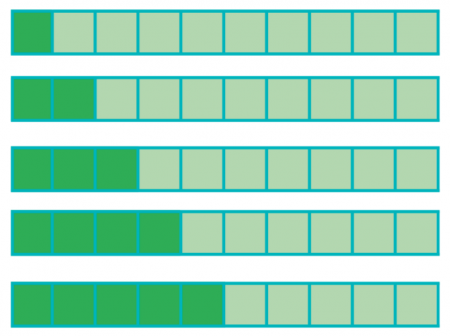
Teach number bonds in a variety of ways. When learning number bonds to 5 or 10 it is always good to use pictorial representation, so show rows of blocks shaded like this to make the concept clear:
Number bonds to 10
It is also a good idea to show children the connection between number bonds to ten, twenty and one hundred, for example:
Knowledge of number bonds is essential when it comes to harder calculations involving addition and subtraction (for example, children learn to bridge numbers to help them add numbers mentally), so it is vital children get a firm grounding in this from Years 1 to 3.

Friday, 26 January 2018

Learning in a Changing World - Cyclone PL 2018

Cyclone PL

The why, how and what for eLearning Digitial Fluency: Lynne Thomas

Digital Fluency PL 2018: Lynne Thomas