I am learning that Counting is out and Chunking is in. Number Bonds are a way of teaching students how numbers can join together and how they can be broken down into component parts. Number bonds are also often referred to as 'number pairs'. They are simply the pairs of numbers that make up a given number.
1 + 9, 2 + 8, 3 + 7, 4 + 6, 5 + 5
1 + 19, 2 + 18, 3 + 17, 4 + 16, 5 + 15
Children start to learn about number bonds in the Foundation stage, when they might be given a number, such as 5, and then asked to select two groups of objects that will add up to that number.
Children are expected to know number bonds to 10 and number bonds to 20. Children by now need to be very confident with their number bonds to 20. They need to be able to work out number bonds to 100. They also need to be confident with the corresponding subtraction facts (for example: 20 - 13 = 7).
So what?
What appeals is the idea of MODEL - Story - Reptition
What now?
Teach number bonds in a variety of ways. When learning number bonds to 5 or 10 it is always good to use pictorial representation, so show rows of blocks shaded like this to make the concept clear:
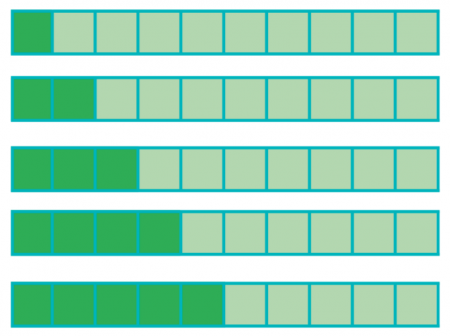
It is also a good idea to show children the connection between number bonds to ten, twenty and one hundred, for example:

Knowledge of number bonds is essential when it comes to harder calculations involving addition and subtraction (for example, children learn to bridge numbers to help them add numbers mentally), so it is vital children get a firm grounding in this from Years 1 to 3.

No comments:
Post a Comment